

Table of Contents
Why Legal Awareness Matters
In any democracy, knowledge is protection. When citizens understand their constitutional rights, they are better equipped to prevent misuse of authority, protect community interests, and ensure peaceful coexistence.
India’s Constitution guarantees freedom — but it also defines boundaries. This article aims to clarify what the law says about religious gatherings, use of loudspeakers, and permissions, so that communities act confidently and lawfully.
Your Constitutional Protection
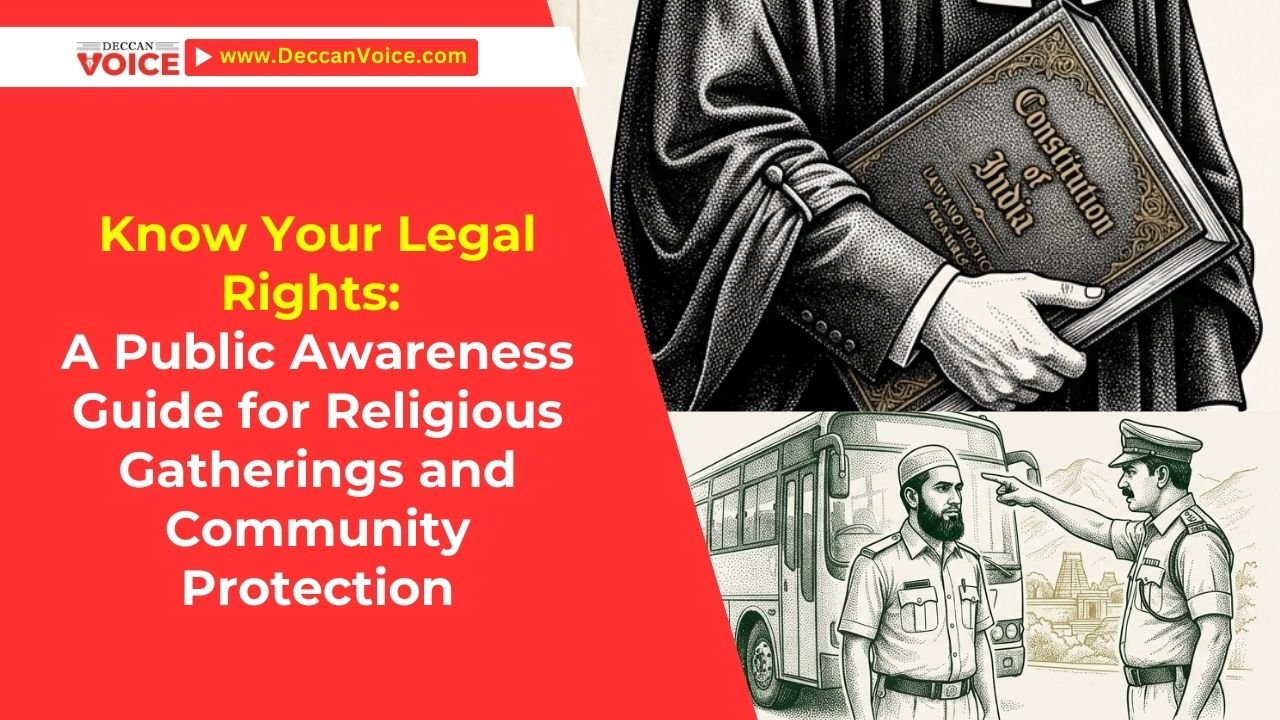
Two important Articles of the Indian Constitution protect citizens in matters of speech and religion:
Article 19
Protects freedom of speech and expression.
Article 25
Guarantees freedom of religion — including the right to:
Practice religion
Profess religion
Propagate religion
However, these freedoms are subject to:
Public order
Morality
Health
This means your rights are protected — but they must not disturb public peace or violate law.
Do Religious Gatherings Require Police Permission?
This is one of the most common questions.
✅ If the gathering is held on private property:
Such as a home, private hall, madrasa, or privately managed institution
And it does not disturb public order
And it does not block public roads
➡️ Police permission is generally not mandatory.
However:
⚠️ If the gathering is held in public places:
Roads
Parks
Open grounds
Public streets
➡️ Permission from local authorities is required.
The key difference lies in whether the event affects public space and public order.
What About Loudspeakers?
Even if a religious gathering is held on private property, the use of loudspeakers is regulated under noise control laws.
Important points:
Loudspeaker use is not an absolute right.
Time restrictions apply (especially at night).
Noise levels must comply with environmental regulations.
Authorities can restrict amplification if it disturbs public peace.
Religious freedom does not override environmental or public safety laws.
When Authorities Cannot Act Arbitrarily
Authorities must follow due process. They cannot:
Stop lawful religious activities without legal basis.
Block entry into places of worship without valid justification.
Impose restrictions that violate constitutional protections.
If actions appear unjustified, citizens have the right to:
Seek clarification in writing.
Approach higher authorities.
Challenge unlawful actions through legal channels.
Public Order and Responsibility
While rights are guaranteed, responsibility is equally important.
Communities should ensure:
Gatherings remain peaceful.
Traffic is not obstructed.
Public inconvenience is minimized.
Noise limits are respected.
No inflammatory speech is delivered.
When communities act responsibly, it strengthens their legal position.
Why Misinformation Is Dangerous
Rumors about permissions, bans, or legal restrictions often spread quickly. Acting on unverified information can:
Create unnecessary fear.
Damage social harmony.
Lead to avoidable conflict.
Before reacting:
Verify through official sources.
Consult legal experts if needed.
Avoid forwarding unconfirmed messages.
Responsible awareness prevents panic and confusion.
The Role of Community Leaders
Scholars, teachers, and community leaders play an important role in spreading legal awareness.
They should:
Educate people about constitutional rights.
Promote lawful conduct.
Encourage peaceful dialogue.
Guide people on legal remedies when necessary.
Knowledge builds confidence. Ignorance creates vulnerability.
Conclusion: Law Is Protection, Not Fear
The Constitution of India protects religious freedom — but within reasonable limits that safeguard public order and harmony.
Understanding the law helps communities:
Exercise rights confidently.
Avoid unnecessary confrontation.
Stand firm against unlawful restrictions.
Maintain peace and dignity.
Legal awareness is not about confrontation — it is about protection.
When rights and responsibilities go hand in hand, society remains strong, balanced, and just.