

Table of Contents
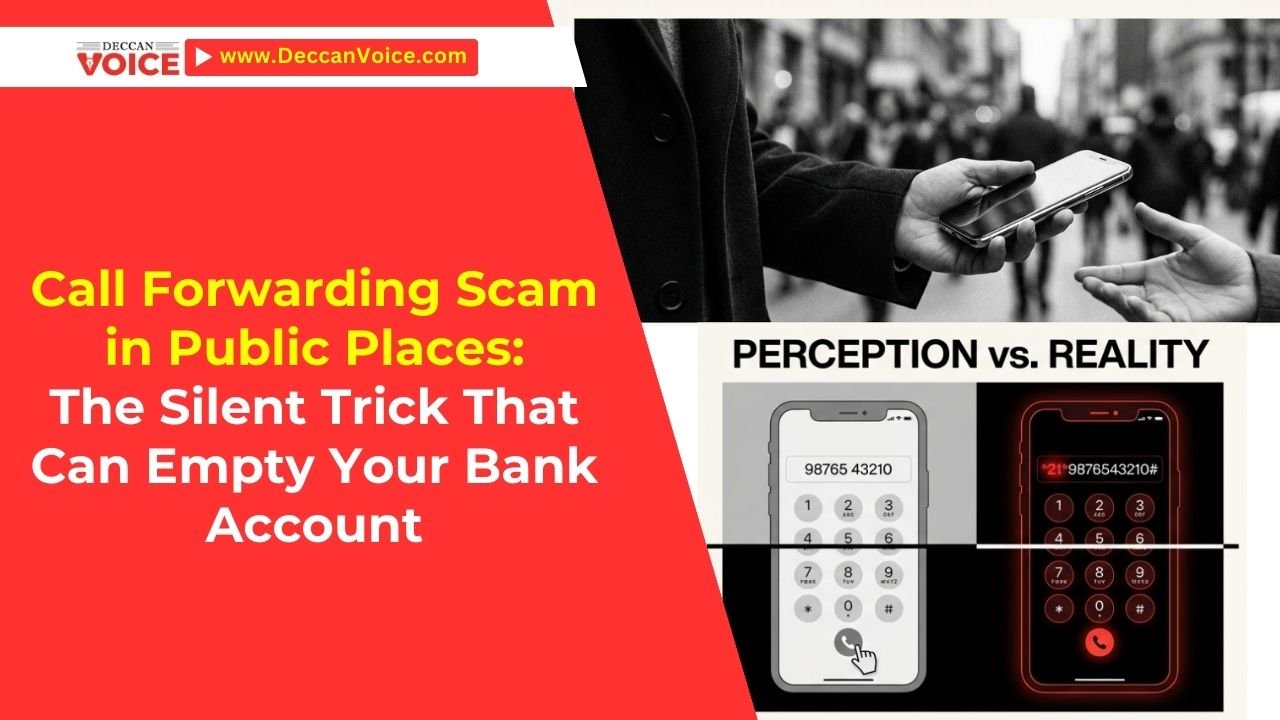
Call forwarding scams are becoming one of the most dangerous and silent frauds in India. Unlike typical scams where a criminal asks for OTP directly, this fraud happens in seconds—often in public places, right in front of you, without you realizing what just changed in your phone.
The scam starts with something that looks harmless:
“Bhaiya, mera phone band ho gaya… ek call karne doge?”
But behind this small request is a major trap.
How This Call Forwarding Scam Really Works
This scam usually happens when a stranger approaches you and asks to use your phone for a “quick call.”
They might say things like:
“Mere phone ki battery khatam ho gayi hai…”
“Mera recharge khatam ho gaya…”
“Mera phone nahi uthaa rahe…”
“Emergency hai, bas ek call karna hai…”
Since the request sounds normal, many people help—especially near:
Bus stops
Railway stations
Markets
Hospitals
Malls and crowded areas
But what happens next is the real scam.
The Hidden Code Trick: Forwarding Your Calls to the Scammer
Instead of dialing a normal number, the scammer quickly dials a hidden call-forwarding code, usually starting with:
✅ 21 / 21
and then adds their own number.
The moment this happens:
⚠️ Your incoming calls start getting forwarded to the scammer’s phone.
You won’t even get a warning.
No pop-up.
No alert.
Everything looks normal.
How OTPs Get Stolen Without You Sharing Anything
Once your phone is forwarded, the scammer waits.
Now think about the most dangerous part:
When your bank, courier company, wallet app, or any verification service calls you to read out:
OTPs
verification codes
account confirmation
➡️ that call goes to the scammer instead of you.
That’s how:
bank accounts get compromised
UPI accounts get hacked
WhatsApp can get hijacked
money gets stolen without you even sharing your OTP directly
This is what makes call forwarding fraud so dangerous.
The Smart Solution: How to Help Someone Without Getting Scammed
Helping people is good—but do it safely.
If someone asks for your phone, follow this rule:
✅ Never hand over your phone directly.
Instead, say politely:
“Number batao, main khud dial karta hoon.”
Safe Steps
✔️ Step 1: Ask for the number
✔️ Step 2: You dial it yourself
✔️ Step 3: Once the other person picks up, hold the phone and let them talk
✔️ Step 4: Don’t let the phone go far from your hands
✔️ Step 5: Tell them to speak only in front of you
✔️ Step 6: After the call ends, immediately check:
SMS inbox
recent call history
any strange outgoing code
This small habit can save you from massive financial loss.
Important Warning: Never Dial These Codes for Strangers
To stay safe, never dial or let anyone dial these codes on your phone:
🚫 Codes starting with:
21
61
67
These are commonly used for call forwarding settings.
If You Suspect a Scam: Switch Off Call Forwarding Immediately
If you feel something suspicious happened, don’t panic.
✅ Dial this code immediately to cancel call forwarding:
This can disable all call forwarding settings on many networks.
(If it doesn’t work, contact your network provider right away.)
Report the Scam: Don’t Stay Silent
If you faced such an incident or lost money, report quickly:
📞 Cyber Crime Helpline: 1930
🌐 Website: cybercrime.gov.in
Quick reporting can sometimes help stop transactions or freeze suspicious activity.
Conclusion
Call forwarding scams are spreading fast because they look harmless and happen silently in public places. A stranger asking for a phone call may sound normal—but scammers use it to forward your calls and steal OTPs without your knowledge.