

Table of Contents
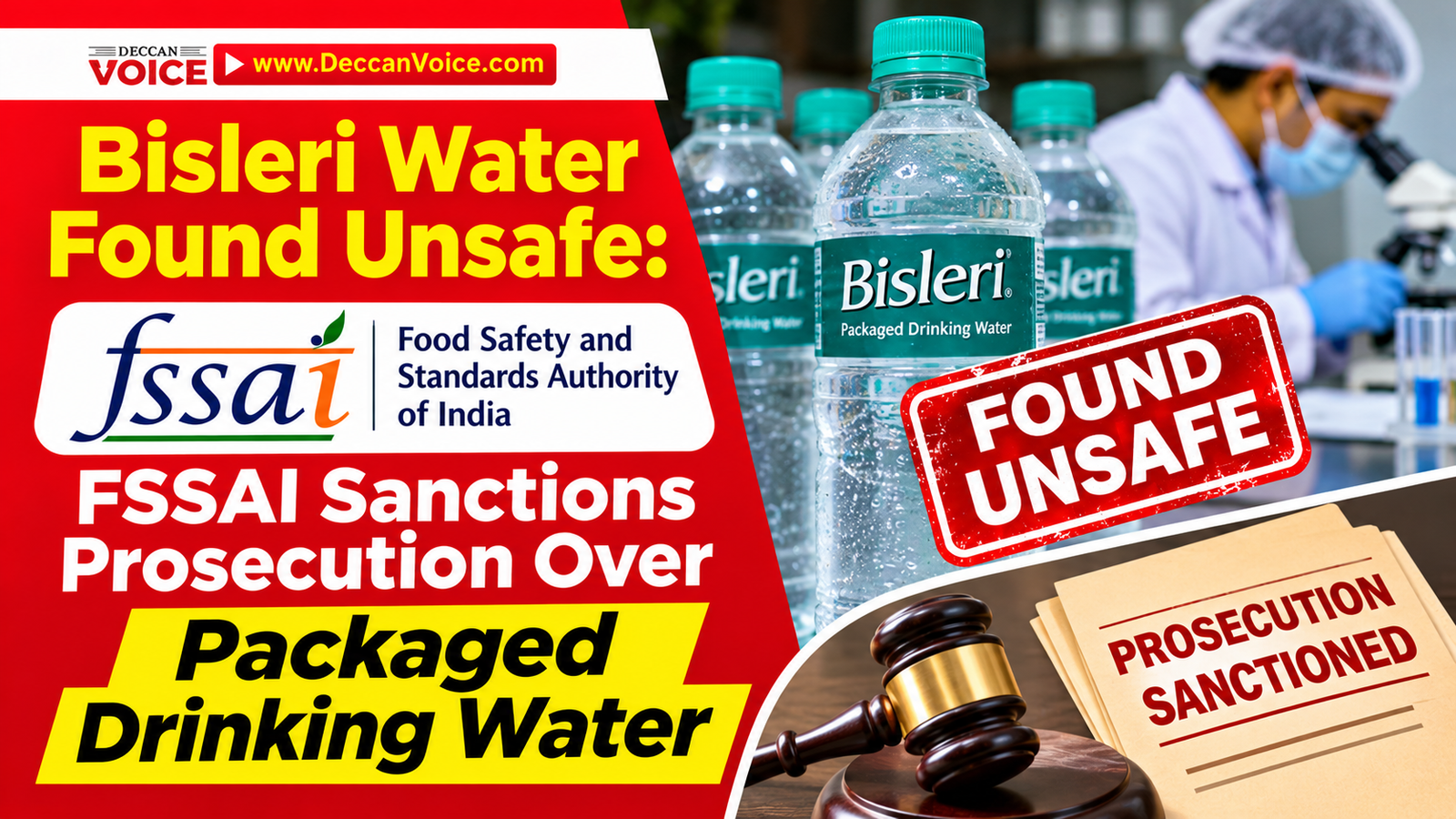
In a significant development for India’s packaged drinking water industry, the Food Safety and Standards Authority of India (FSSAI) has sanctioned prosecution against Bisleri International Pvt. Ltd. after a regulatory sample of its packaged drinking water was declared unsafe in laboratory examinations.
According to the food regulator, the initial sample did not comply with prescribed bromate limits. Following an appeal by the company, the sample underwent further laboratory analysis, which detected polynuclear aromatic hydrocarbons (PAHs) and again classified it as unsafe.
The findings have prompted the regulator to authorise prosecution under the Food Safety and Standards Act, 2006. The development has raised questions about quality control, regulatory monitoring and consumer safety in the packaged drinking water sector.
FSSAI Finds Packaged Drinking Water Sample Unsafe
The FSSAI collected a regulatory sample of packaged drinking water, classified as “Packaged Drinking Water (other than Mineral Water),” from the premises of Bisleri International for testing.
The initial laboratory examination found that the sample did not comply with the prescribed bromate limits. Based on this finding, the regulator declared the sample unsafe under the Food Safety and Standards Act, 2006.
The regulator subsequently initiated further action after the company appealed against the initial findings.
Second Laboratory Test Also Raises Safety Concerns
Following the company’s appeal, the sample was referred for further examination at a food laboratory.
The second assessment also declared the sample unsafe, this time citing the detection of polynuclear aromatic hydrocarbons (PAHs).
The findings from the laboratory examinations established violations relating to unsafe food under the applicable law, according to the FSSAI.
The regulator has not publicly disclosed in the cited report the exact quantity of bromate or PAHs detected, the specific product variant, the batch number or the sampling location.
What Are Bromate and PAHs?
The laboratory findings refer to two different chemical safety concerns.
1. Bromate
Bromate is a chemical compound whose presence in drinking water is subject to prescribed safety limits. Its concentration must remain within the applicable regulatory standards. A sample exceeding those limits can raise concerns about the safety and quality of drinking water.
2. Polynuclear Aromatic Hydrocarbons (PAHs)
PAHs are a group of chemical compounds that can be generated through processes such as incomplete combustion of organic materials. Some compounds within this group are recognised as carcinogenic or potentially carcinogenic.
Their detection in a drinking water sample is therefore a serious matter requiring regulatory examination. However, the specific PAH compounds and their concentrations were not detailed in the reports reviewed.
FSSAI Sanctions Prosecution Under Food Safety Act
Following the laboratory findings, the FSSAI sanctioned the launch of prosecution against Bisleri International Pvt. Ltd. under the Food Safety and Standards Act, 2006.
This authorisation allows the prosecution process to move forward under the law. It is an important regulatory step, but it should not be confused with a final court conviction.
The company will have the opportunity to respond through the legal process, and the outcome will depend on the proceedings and evidence considered by the competent authorities.
Other Food Companies Also Face FSSAI Action
The regulatory announcement also covered enforcement action against other food businesses.
According to the reports, the FSSAI sanctioned prosecution against:
Vasant Masala Pvt. Ltd.
Tit-Bit Foods India Pvt. Ltd.
Mimansa Industries
Asha Confectionery
The regulator also suspended the licences of Urmi Lifesciences LLP and Gaur Ayurvedic Store for non-compliance with food safety requirements.
In a separate action, Asha Confectionery was directed to recall pre-packaged chocolate-filled cookies after the products were found unsafe.
What Does This Mean for Consumers?
The development highlights the importance of regular food safety testing and strict quality control in the packaged drinking water industry.
Consumers generally rely on established brands and assume that packaged water available in the market meets prescribed safety standards. Regulatory sampling and independent laboratory testing are therefore essential to identify potential quality issues.
At the same time, it is important to understand the scope of the present finding. The reported action concerns a particular regulatory sample collected from Bisleri International’s premises. The available reports do not establish that every Bisleri bottle, batch or product sold across India is unsafe.
The reports also do not announce a nationwide recall of all Bisleri packaged drinking water.
Conclusion: Food Safety Must Remain a Priority
The FSSAI’s decision to sanction prosecution against Bisleri International following two laboratory assessments is a significant development in India’s food safety enforcement efforts.
The findings involving bromate limits and the detection of PAHs underline the importance of maintaining strict quality standards for products intended for human consumption.
While the legal process will determine the company’s liability, the case serves as a reminder that no food or beverage brand should be beyond regulatory scrutiny. Consistent inspections, transparent laboratory reports and effective enforcement are essential to protecting consumers and maintaining public confidence in India’s packaged drinking water industry.